Why Cheap Compressed Sofas Fail After 60 Days in Transit
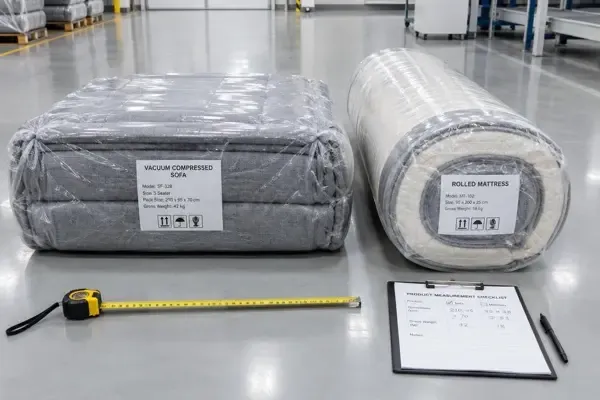
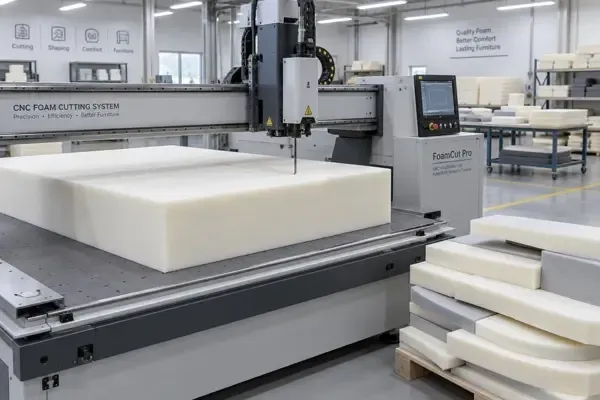
Every compressed sofa looks great on a factory floor before pressing. The real engineering test happens 30 to 75 days later when a customer cuts open the vacuum bag in a cold apartment. Low-density filler foam (24–28 kg/m³) suffers cell-wall collapse under sustained vacuum pressure, causing permanent creases and soft center seats.
The Three Foam Numbers Every B2B Buyer Must Verify
| Parameter | Recommended Export Spec | Risk Below Threshold |
|---|---|---|
| Seat Core Density | 38–45 kg/m³ High-Resilience (HR) | Bottoming out & sagging within 3–6 months |
| 72H Compression Set | < 5% permanent thickness loss | Visible corner creases & uneven seat height |
| 24H Full Rebound | ≥ 98% of nominal height (±1.5 cm) | Customer "wrinkled / deformed" returns |
How Upholstery Fabric & Seam Allowance Affect Rebound
Tight, non-stretch woven fabrics or narrow 8 mm seam allowances pull unevenly when compressed 4:1, creating permanent puckering along piping lines. Every Kivmor compressed model uses widened reinforced overlock seams and stretch-tested chenille, corduroy, linen-weave, teddy or technical pet-friendly upholstery.
Pre-Shipment QA Protocol You Should Request
- Log foam batch density and supplier lot number on every production order.
- Unbox a retained compressed sample after 7 days and film a time-stamped 1h / 6h / 24h recovery video.
- Advise retail buyers to unbox within 90 days of delivery and allow 24–48 hours (longer below 15°C / 59°F) for full expansion.
Need exact 40HQ loading figures or a 1-piece sample quote?